Advancing Circular Economy in Benin: From Strategy Development to Implementation Readiness
Published: December 5, 2025
How Benin is structuring its circular economy transition through policy, governance, and sectoral action
Translating circular economy ambition into implementation requires more than a strategic framework — it depends on how institutions align, prioritise, and coordinate over time.
In Benin, the adoption of the Plan d’Action National pour l’Économie Circulaire (PAEC) 2025–2035 marks an important step in structuring this transition. The plan provides a national framework to guide the country toward a more resource-efficient, inclusive, and resilient economic model.
From vision to structure: building a national framework
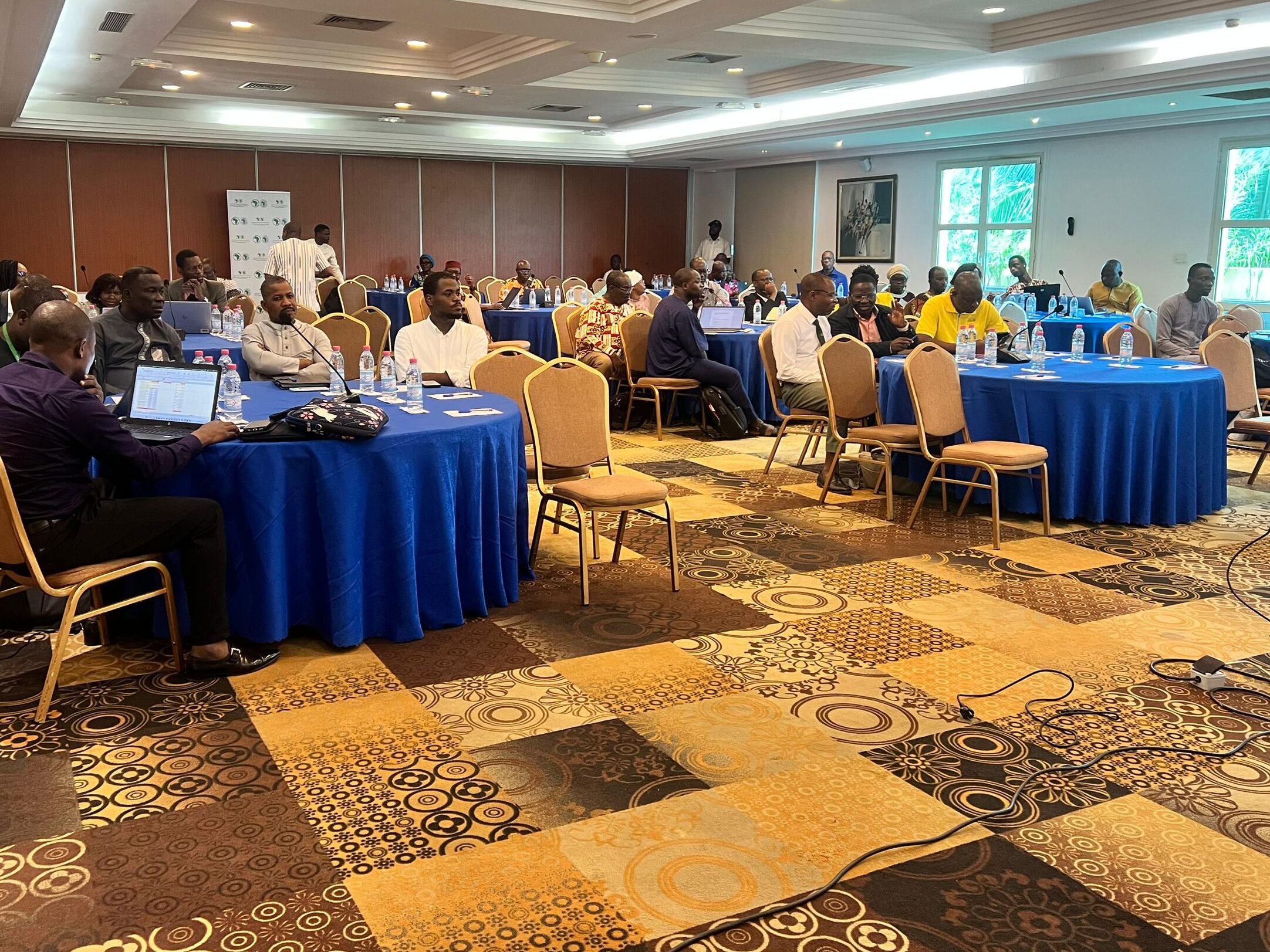
Through its support to the development of the PAEC, Africa Circular worked alongside the Ministry of Living Environment and Transport and national stakeholders to translate circular economy ambition into a structured, actionable roadmap.
The process combined sectoral diagnostics, multi-stakeholder consultations, and iterative co-construction. What emerged is not only a policy document, but a shared framework that reflects institutional priorities and national realities.
This highlights an important lesson: the strength of a strategy lies not only in its vision, but in how it is built and owned by the institutions responsible for implementation.

Aligning priorities across key sectors
The PAEC focuses on five priority sectors — agriculture and forestry, solid waste, plastics, transport and mobility, and construction — where circular approaches can generate both environmental and economic value.
Across these sectors, the plan aims to:
- strengthen economic and climate resilience,
- develop inclusive and competitive value chains,
- improve resource productivity, and
- position Benin as a reference for circular economy development in the Francophone region.
This sectoral focus reflects a broader shift from conceptual ambition to targeted, implementable action.
Structuring implementation and governance
A key feature of the PAEC is its emphasis on implementation readiness.
The roadmap outlines:
- 34 strategic objectives and 134 actions,
- a ten-year implementation timeline,
- a monitoring and evaluation framework, and
- a diversified financing approach engaging public, private, and development partners.
It also introduces a phased governance structure, starting with a Technical Team for the Circular Economy and progressing toward the establishment of a National Agency.
This reinforces a critical insight: effective circular economy transitions require clear institutional structures and long-term coordination mechanisms.
What this means for circular economy transitions
Benin’s experience reflects a broader pattern observed across circular economy strategies: Progress depends not only on defining ambition, but on building the systems required to deliver it.
| By aligning policy, sectors, and governance structures, the PAEC creates a foundation for sustained implementation. |