Market Study for South Africa: Circularity in the Plastics Value Chain – Opportunities and Barriers
Published: February 18, 2025
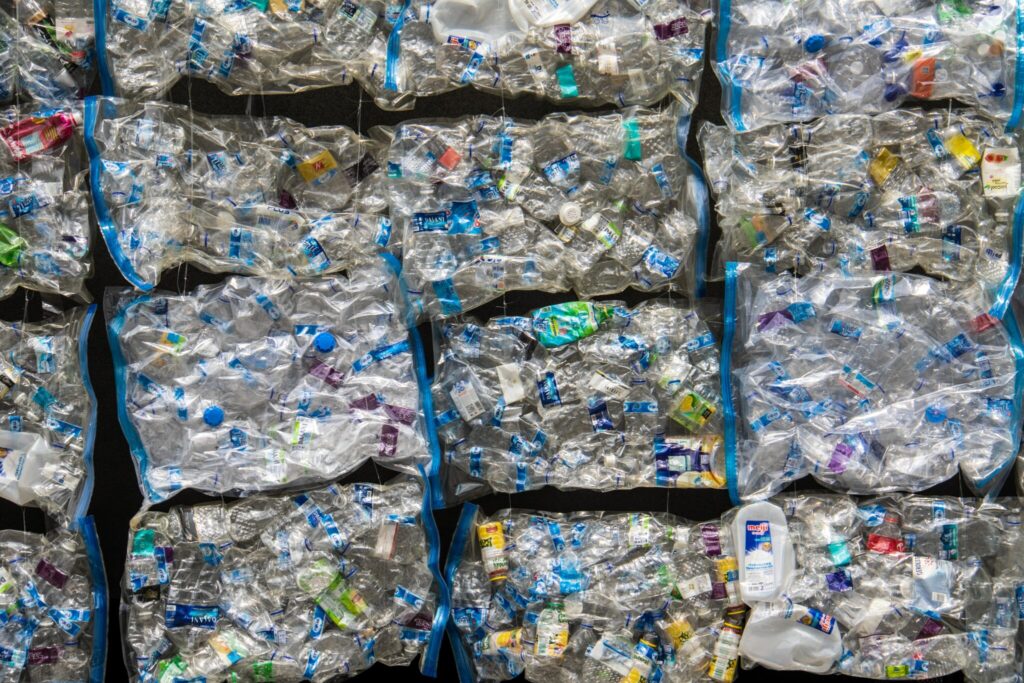
How can South Africa successfully transition to a circular economy for plastics?
With a large mining sector which includes coal; a major feedstock for energy supply and plastic production, circularity of plastics in South Africa centres much on mechanical plastic recycling. Meanwhile, this model is facilitated through voluntary EPR packaging schemes for PET beverage, rigid polyolefins and some flexible polyolefins, polystyrene (both expanded polystyrene and high impact polystyrene), and to a lesser degree, vinyl packaging. Occasionally, other plastic types may be included by mere coincidence or through the action of specific sustainability and waste management goals of producers.
In a quest to understand the plastic value chain in South Africa, the project team conducted a study on specific sectors – the plastic packaging, the construction and agricultural industries, electrical and electronic goods producers and the automotive industry.
The study considered market opportunities that existed in:
- material substitution to reduce the burden of problematic and currently unrecyclable plastics in South Africa;
- models using reusable packaging, categorised according to the models 1. Refill at home, 2. Return from home, 3. Refill on the go, and 4. Return on the go, as per the Ellen MacArthur Foundation’s (2019) Reuse – Rethinking packaging publication.;
- recycling – closed loop, and recycling – open loop, including the necessary interventions to drive recyclability and the inclusion of recycled content.
An assessment was achieved through literature review, data analyses and interviews conducted with relevant stakeholders. The study was led by GreenCape in collaboration with ACEN Foundation, WRAP, Trinomics, WWF South Africa and SAPRO.
Read the report here.
More from South Africa
More from South Africa
 South Africa
Continental Action Plan for Circular Economy in Africa (2024-2034)
Africa unites to design a circular economy roadmap for a sustainable future
Read the story -> South Africa
Trade Processes for Waste and Recyclables
ACEN Foundation collaborated with Trinomics in a project funded by Deutsche Gesellschaft für Internationale Zusammenarbeit (GIZ) GmbH to conduct an investigation into the trade…
Read the story -> South Africa
Technical Assistance for the Development of an STI Led Cross-Sectoral Circular Economy Roadmap for Abating GHG Emissions in South Africa
South Africa still operates in a linear economy, with the biggest and still growing resource-heavy industries of mining, agriculture, human settlements, manufacturing, and transport…
Read the story ->